
Signage is the primary visual communication system used to convey information, identification, and direction. It strategically functions to build brand identity and influence consumer behavior; research from FedEx Office shows that 76% of consumers enter a new store based on its signs, and 67% of them purchase something. This system also delivers essential information, facilitates wayfinding in complex environments, and ensures regulatory safety compliance.
Signage is categorized into distinct types based on function and location, including dynamic Digital Signage, durable Outdoor Signage, and highly visible Pylon Signage. This categorization extends to Indoor Signage for internal navigation and specific Informational and Health and Safety signs for regulatory control. Fabrication relies on specific materials chosen for their attributes, such as modern Acrylic, Premium Metal, traditional Wood, versatile Plastic, and flexible Vinyl for graphics.
The primary benefits of professional signage include significant increases in brand awareness, 24/7 advertisement, and a proven competitive advantage. Signage is a highly cost-effective marketing asset; research from POPAI (Point of Purchase Advertising International) confirms over 70% of retail purchase decisions are made in-store, heavily influenced by signage. Its application is critical across diverse sectors, including retail store promotions, healthcare wayfinding, construction site safety, and business identification. Understanding these elements is key to creating a professional signage system that delivers measurable results.
What is Signage?
Signage is the strategic use of signs, symbols, and graphic design to communicate information to an audience. Signage is a primary visual communication tool for identification, direction (wayfinding), promotion, and regulatory safety (warning). Signage utilizes text, graphics, colors, and illumination to convey specific messages in physical spaces.
What are the purposes of Signage?
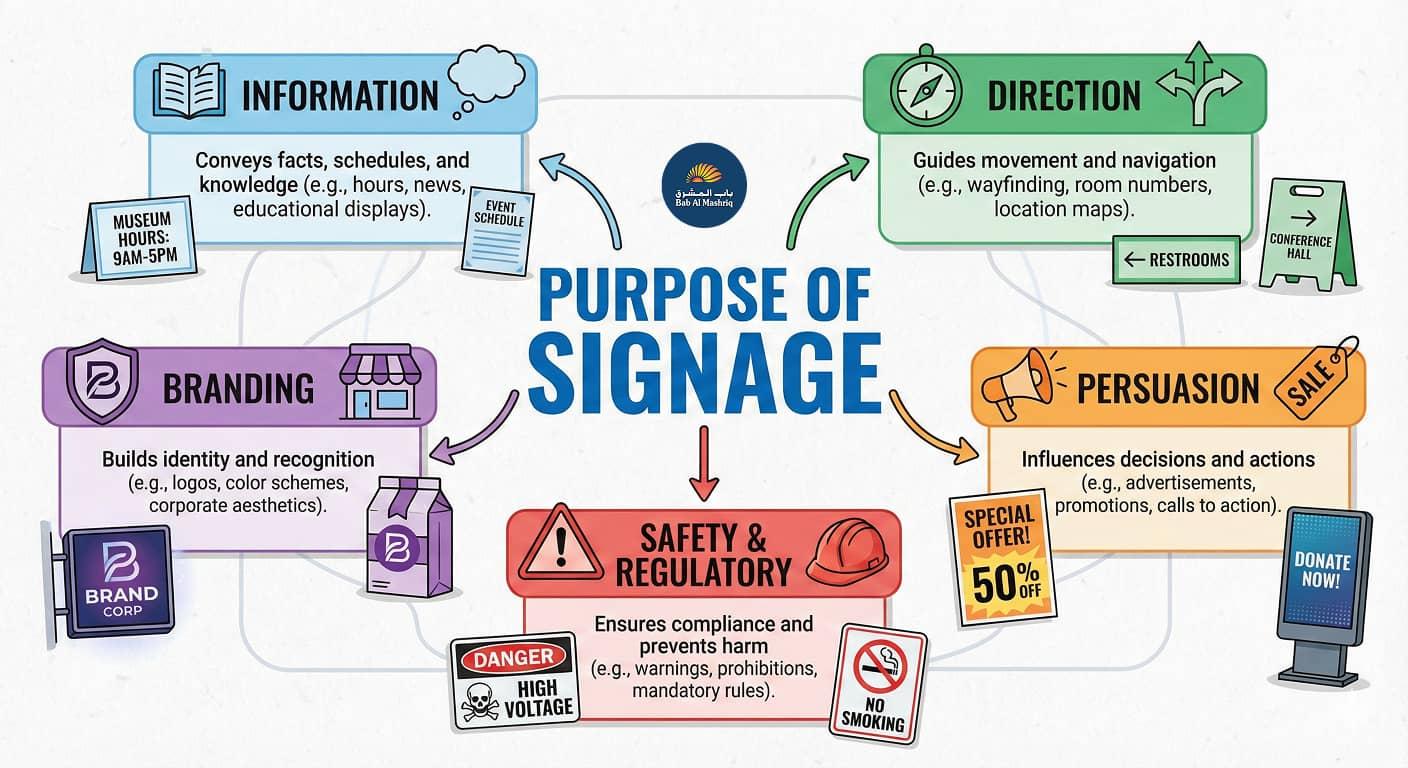
Signage serves five primary functions. It delivers key information with facts and details, provides wayfinding direction, builds brand identity through ads and promotions, persuades customers to guide their actions, and ensures compliance through critical safety and regulatory warnings.
Information
Informational signage provides essential instructions, details, and facts to an audience. Examples include menu boards, pylons signage, event information posters, and product specification sheets. It answers key questions, enabling individuals to make timely, informed decisions.
Direction
Directional signage facilitates wayfinding by guiding people to a specific location. It is critical for navigating complex environments, including airports and hospitals, using directory maps, room number signs, and overhead arrows.
Branding
Branding signage establishes a company’s identity through illuminated channel letters, reception-area logos, and promotional ads. This creates visual recognition and differentiates the business from competitors, transforming a space into a branded environment.
Persuasion
Persuasive signage influences customer behavior to encourage a purchase. Examples include point-of-sale displays, “Sale” banners, Billboards, and promotional offers. These signs are designed to attract attention and motivate immediate action.
Safety & Regulatory
Safety and regulatory signage communicates rules for legal compliance and health and safety. These include fire exit signs, braille signs, and wet floor placards. This protects individuals and mitigates corporate liability.
What are the benefits of Signage?
Signage offers benefits such as increased brand awareness, cost-effective marketing with high longevity, and a channel for effective communication. Furthermore, it creates a significant competitive advantage and delivers a 24/7 advertisement for the business.
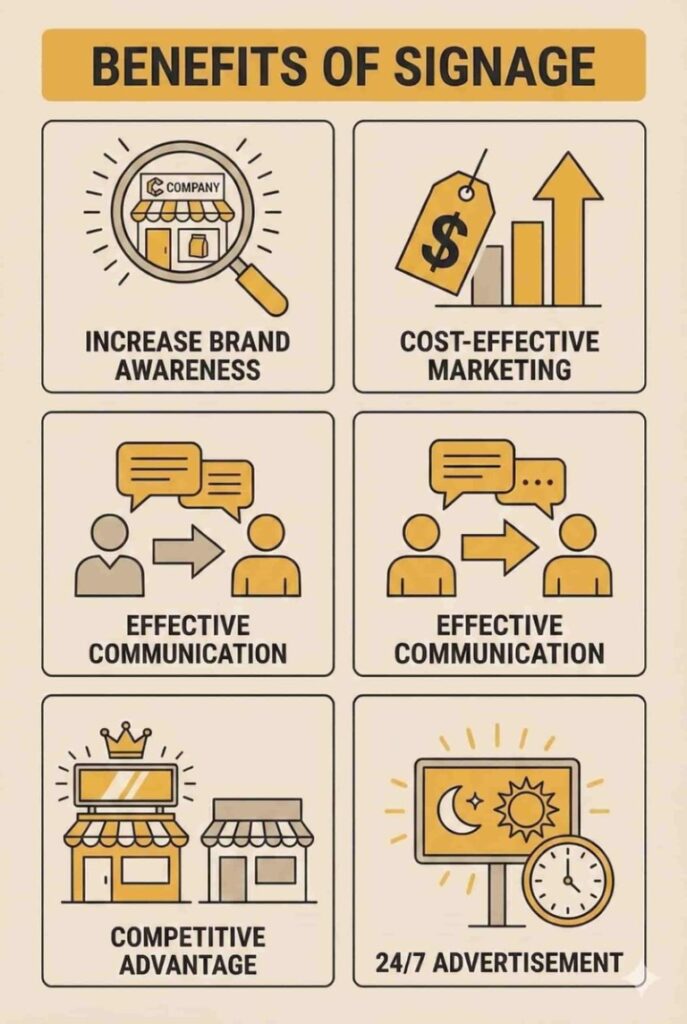
- Increased Brand Awareness: Signage boosts brand recognition through consistent visual identity. Its attention-grabbing design captures consumer attention, differentiates the business, and makes its location memorable.
- Cost-Effective Marketing: Signage offers high longevity as a one-time investment with a low cost-per-impression. It provides continuous local reach, delivering superior long-term ROI compared to digital ads.
- Effective Communication: Signage is a primary tool for effective communication. It conveys vital information, promotion details, instruction, and emergency alerts, ensuring clarity for all occupants.
- Competitive Advantage: Strategic signage provides a competitive advantage. It creates a positive first impression and achieves market differentiation, as 68% of consumers believe signs reflect product quality.
- 24/7 Advertisement Signage acts as a silent, 24/7 advertisement. Illuminated options provide high night visibility, ensuring a constant presence that promotes the business location even after hours.
What are the types of Signage?
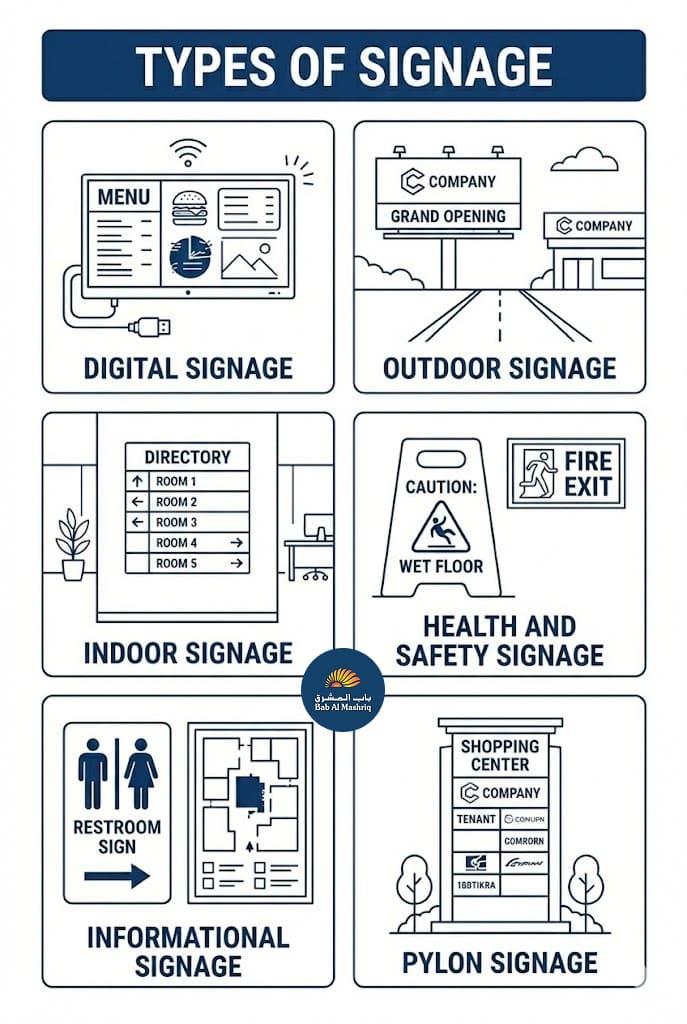
Signage is categorized by its application and location. This includes dynamic Digital Signage and weather-resistant Outdoor Signage. Inside, Indoor Signage guides occupants, while Health and Safety Signage ensures regulatory compliance. Informational Signage provides specific data, and large-scale Pylon Signage ensures visibility from a distance.
Digital Signage
Digital Signage uses displays such as LED screens, interactive kiosks, and video walls to display dynamic content. This technology enables businesses to update advertising, information, and entertainment in real time.
Outdoor Signage
Outdoor Signage is designed for exterior visibility and durability. Common examples include billboards, monument signs, and illuminated channel letters. These signs attract customers and identify a business location.
Indoor Signage
Indoor Signage guides and informs people within a building. This category includes lobby logos, wayfinding directories, and ADA-compliant room signs. It helps navigate the space and reinforces branding.
Health and Safety Signage
Health and Safety Signage is a regulatory requirement to communicate warnings and instructions. Examples include fire exit signs, wet floor placards, and AED location markers. These signs protect individuals.
Informational Signage
Informational Signage provides specific, helpful details to an audience. This includes building directories, restaurant menu boards, and posted opening hours. Its primary purpose is to answer key questions.
Pylon Signage
Pylon Signage is a tall, freestanding structure used for high visibility from a distance. Examples include highway business signs, shopping plaza tenant directories, and gas station price boards.
Brands rely heavily on signage for advertisement, information, and persuasion. There are many types of signage based on purpose, material, and application.
What are common materials used for Signage?
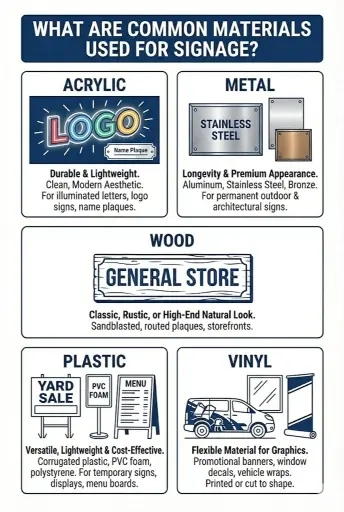
Signage fabrication relies on several common materials selected for their specific properties. Durable Acrylic and premium Metal are used for permanent branding. Wood offers a traditional aesthetic, while versatile Plastic is a cost-effective option. Flexible Vinyl is used for graphics, decals, and banners.
Acrylic
Acrylic is a durable, lightweight polymer used for a clean, modern aesthetic. It is easily shaped and colored, making it ideal for illuminated letters, lobby logo signs, and name plaques.
Metal
Metal signs offer longevity and a premium appearance. Common choices include lightweight aluminum, high-end stainless steel, and classic bronze plaques. These are used for permanent outdoor and architectural signage.
Wood
Wood provides a classic, rustic, or high-end natural look. It is often used for sandblasted signs, routed plaques, and custom storefront signs. The type of wood dictates its durability.
Plastic
Plastic is a versatile, lightweight, and cost-effective material. It includes corrugated plastic for temporary yard signs, PVC foam boards for indoor displays, and polystyrene for menu boards.
Vinyl
Vinyl is a flexible material used for applying graphics to surfaces. It is the primary material for promotional banners, window decals, and vehicle wraps. It can be printed or cut to shape.
Each material has its own pros and cons, and it is always recommended to consult an expert to determine which signage material is best for you.
Where is Signage used?
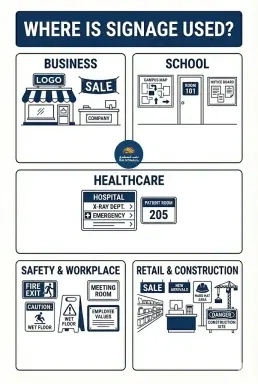
Signage is essential across numerous sectors. It is vital for Signage for Business branding, Signage for School navigation, and Signage for Healthcare wayfinding. It also includes critical Signage for Safety, Signage for Workplace communication, Signage for Retail Store promotions, and Signage for Construction site management.
Signage for Business
Signage identifies businesses with storefront logos, promotional banners, and reception signs. It is essential for branding, advertising, and directing customers in a commercial environment.
Signage for School
Educational institutions use signage for navigation and information. Examples include campus maps, classroom numbers, and event notice boards. These guides guide students, staff, and visitors.
Signage for Healthcare
Healthcare facilities rely on signage for complex wayfinding and identification. This includes hospital directories, departmental signs, and patient room numbers for clarity and efficiency.
Signage for Safety
Safety signage is critical for regulatory compliance and accident prevention. It includes fire exit signs, hazard warnings, and reminders about Personal Protective Equipment (PPE).
Signage for Workplace
Workplaces use signage for internal organization and communication. Examples are meeting room signs, department identifiers, and corporate value plaques for employee information.
Signage for Retail Store
Retail stores use signage to drive sales and organize merchandise. This includes aisle markers, point-of-sale displays, and seasonal sale banners.
Signage for Construction
Construction sites require signage to manage hazards and site traffic. Key examples are site safety boards, danger warnings, and truck route directions.
What’s the difference between Signs and Signage?
A “sign” is a single, individual object that communicates a specific message, such as a stop sign. “Signage” is the collective term for a system or group of signs working together to communicate a unified message, such as a brand identity.
| Feature | Sign | Signage |
|---|---|---|
| Definition | A single, individual marker, notice, or display. | A collection, system, or design of multiple signs. |
| Scope | Singular (e.g., one stop sign). | Collective (e.g., all traffic signs in a city). |
| Purpose | Conveys one specific piece of information. | Creates a complete, cohesive communication system. |
| Example | An “Exit” sign. | The entire wayfinding system in an airport. |
| Noun Type | Countable (one sign, two signs). | Uncountable/Mass Noun (refers to the group). |
What’s the difference between Banner and Signage?
A banner is one specific type of sign, typically made of flexible material like vinyl or fabric, and often used for temporary promotions. “Signage” is the broad, collective term for the entire system of signs used for branding, direction, and information.
| Feature | Banner | Signage |
|---|---|---|
| Definition | A specific type of sign made of flexible material. | The collective system or group of signs. |
| Scope | Singular and specific (e.g., one “Sale” banner). | Collective and broad (e.g., all signs in a store). |
| Material | Usually flexible (vinyl, fabric, mesh). | Varied (metal, acrylic, wood, plastic, vinyl, etc.). |
| Example | A “Grand Opening” banner on a storefront. | The complete wayfinding and branding system of a mall. |
| Relationship | A banner is a component of signage. | Signage is the overall category that may include banners. |
Who are the best Signage companies in the UAE?
The United Arab Emirates, particularly Dubai, hosts several world-class signage companies known for their advanced fabrication and large-scale project delivery. The best signage companies include Bab Al Mashriq, the Joseph Group, Blue Rhine Industries, Sign World, and A3sign. These firms are selected for their comprehensive service, from digital and pylon signs to architectural and retail solutions.
- Bab Al Mashriq is a leading signage manufacturer in the UAE. Bab Al Mashriq is recognized for its extensive capabilities in fabricating pylon signs, digital displays, and large-scale outdoor advertising solutions.
- Qous e Qazah: As one of the largest signage manufacturers in the UAE, Qous e Qazah is the best sigange company in Dubai, renowned for significant projects, including the Dubai Metro. They specialise in architectural, wayfinding, and digital signage.
- Blue Rhine Industries Blue Rhine is a prominent provider of digital and static signage solutions. They are a key supplier of LED screens and signage materials, serving major sectors such as retail, hospitality, and transport.
- Sign World, A Dubai-based company known for innovative, custom-made signage. They focus on high-quality outdoor and interior signs, including 3D lit, acrylic, and metal signs, to build unique brand identities.
- A3sign A3sign is a premium signage company specializing in transforming spaces with high-end internal and external signage. They focus on high-quality materials, such as stainless steel and acrylic, for retail and corporate clients.
How Much Does a Signage Cost in the UAE?
The cost of signage in the UAE varies significantly, ranging from AED 125 for a simple A4-sized acrylic sign to over AED 50,000 for a large-scale, high-resolution outdoor digital billboard. There is no fixed price, as the type, materials, size, and complexity determine the cost.
For a standard shopfront sign, businesses in Dubai or Abu Dhabi typically budget between AED 2,000 and AED 15,000. This wide range accounts for differences between a basic non-illuminated sign and a premium 3D illuminated channel letter sign.
Here is a breakdown of typical price ranges for common signage types in the UAE:
| Signage Type | Typical Price Range (AED) | Common Use Case |
|---|---|---|
| Simple Acrylic Signs | AED 125 – AED 800 | Reception logos, door signs |
| Flex Face Signboard | AED 1,000 – AED 4,000+ | Retail shopfronts, warehouse signs |
| 3D Metal / Acrylic Letters | AED 2,500 – AED 15,000+ | Premium storefronts, corporate lobbies |
| Indoor Digital Display | AED 1,500 – AED 10,000 | Restaurant menus, retail promotions |
| Large Pylon Sign | AED 15,000 – AED 45,000+ | Shopping plazas, highway businesses |
| Outdoor LED Billboard | AED 20,000 – AED 50,000+ | Large-scale advertising |
What Signage Service Does Bab Al Mashriq Offer?
Bab Al Mashriq is offering various signage services in the UAE. Some popular services are listed below.
Signage Cleaning Services and more.
You can check out our signage service page for more details.